










EU Data Act Summary: Understanding Your Obligations at a Glance


The EU Data Act introduces a wide-ranging set of obligations that apply across the data value chain.
Unlike many digital regulations that focus on a single role or activity, the Data Act assigns responsibilities to manufacturers, service providers, data holders, data recipients, cloud and data processing providers, participants in data spaces, and vendors using smart contracts.
To help organisations understand what applies to them in practice, we have mapped the core obligations of the EU Data Act into a single consolidated overview. This summarises how obligations are distributed across roles and chapters of the regulation, from IoT-related data access and B2B data sharing, through to switching obligations for data processing services and horizontal requirements such as unfair contract terms, interoperability, and restrictions on third-country access.
Obligations Under the EU Data Act
Chapter II: Data sharing in the context of IoT (B2B & B2C)
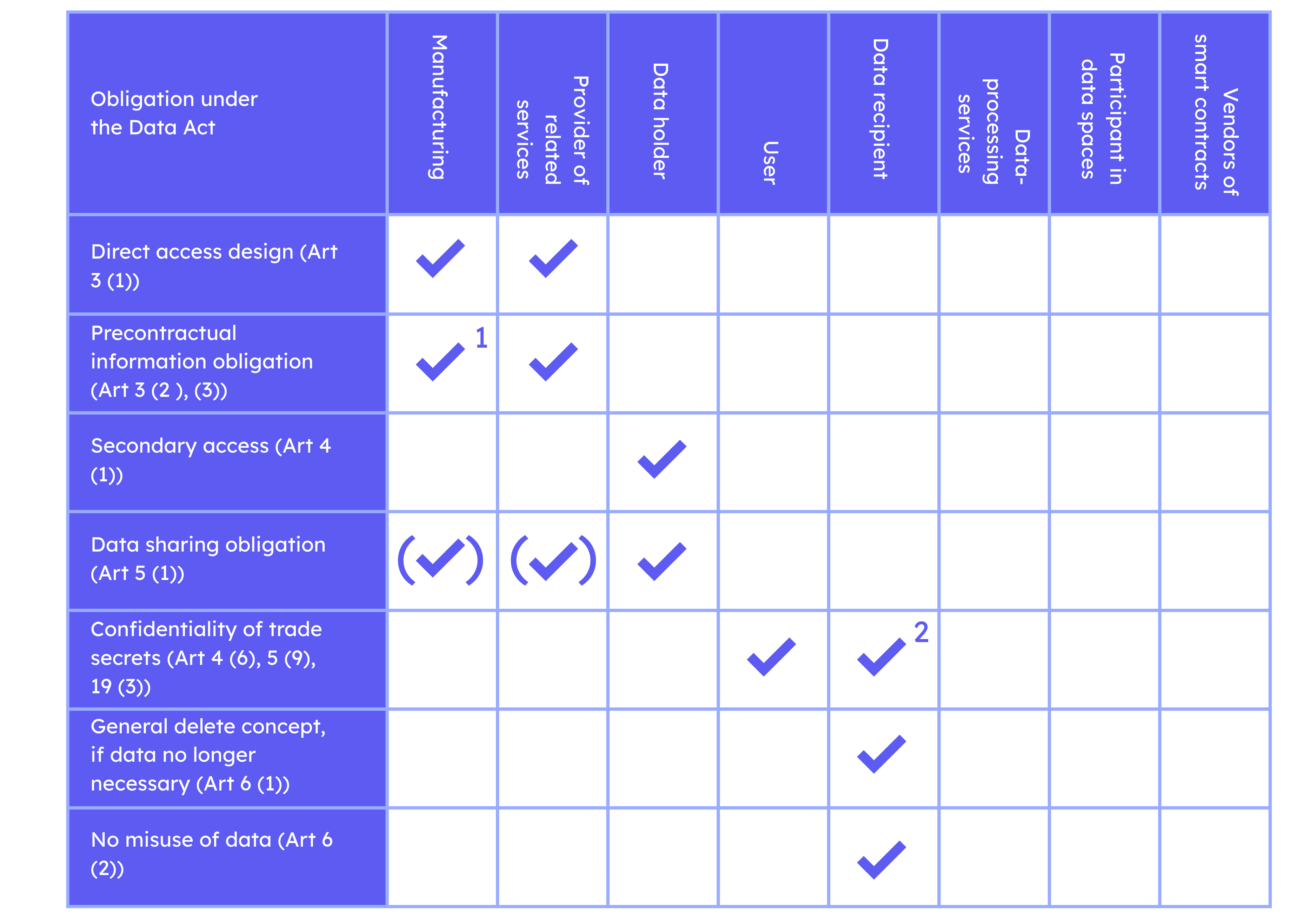 1 Before concluding a contract, the seller, rentor or lessor, which is likely to be the manufacturer, has an information obligation.
2 Similar provision for public sector body, the Commission, the European Central Bank or the Union body according to Art 19 para 3.
Chapter III: Data sharing (B2B)
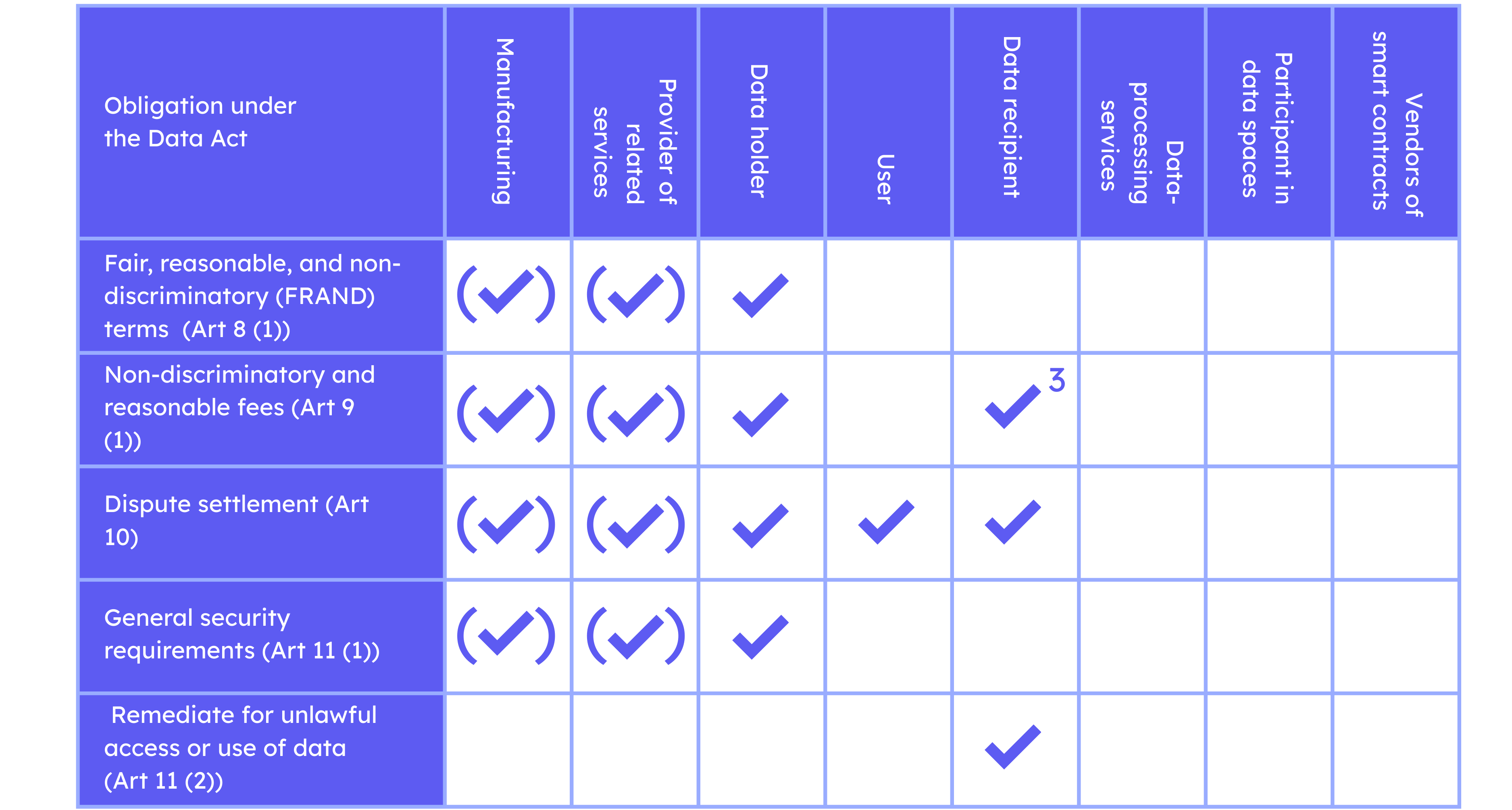 3 The Data Recipient has the payment obligation.
Chapter IV: Switching between data processing services
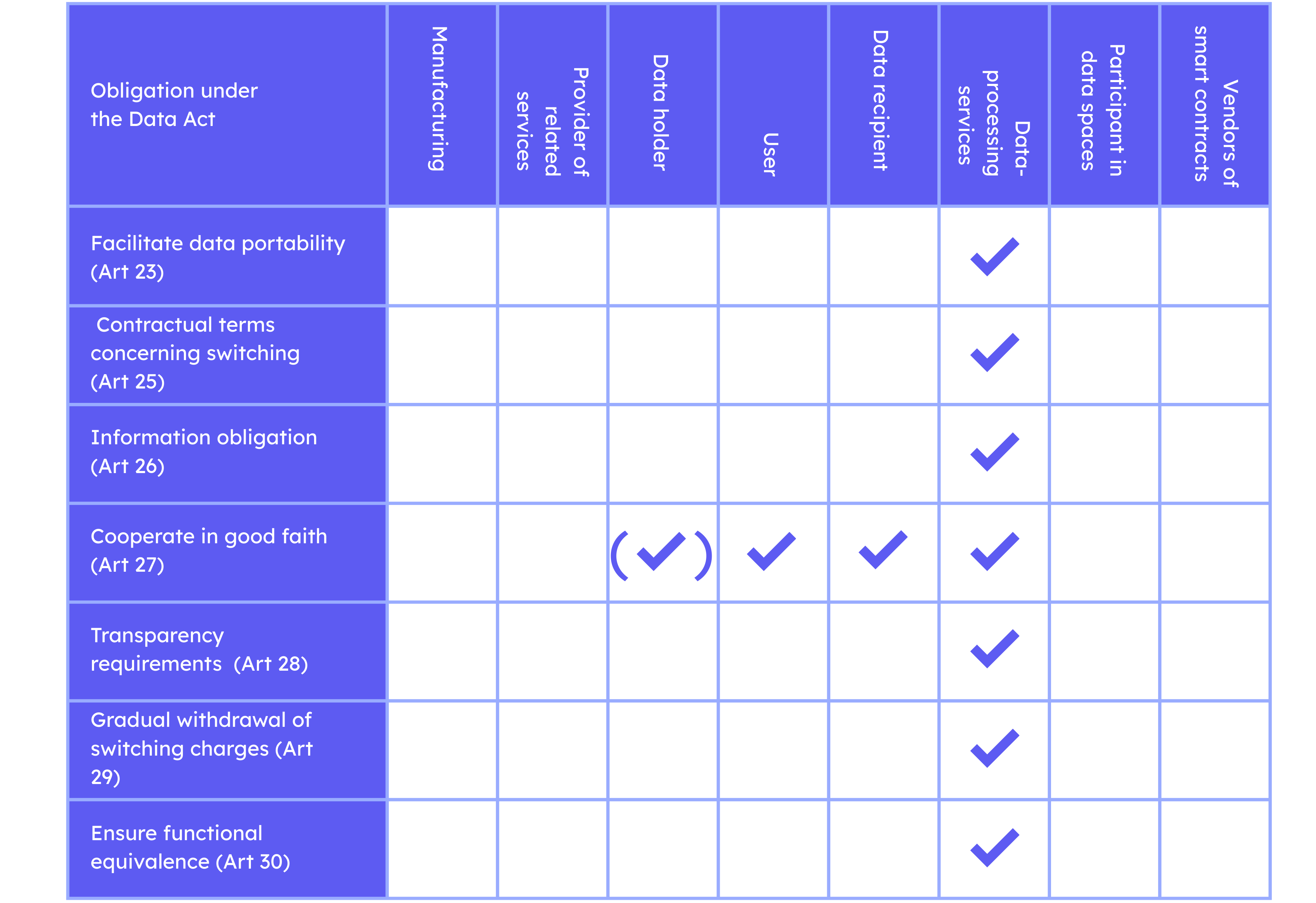
General obligations
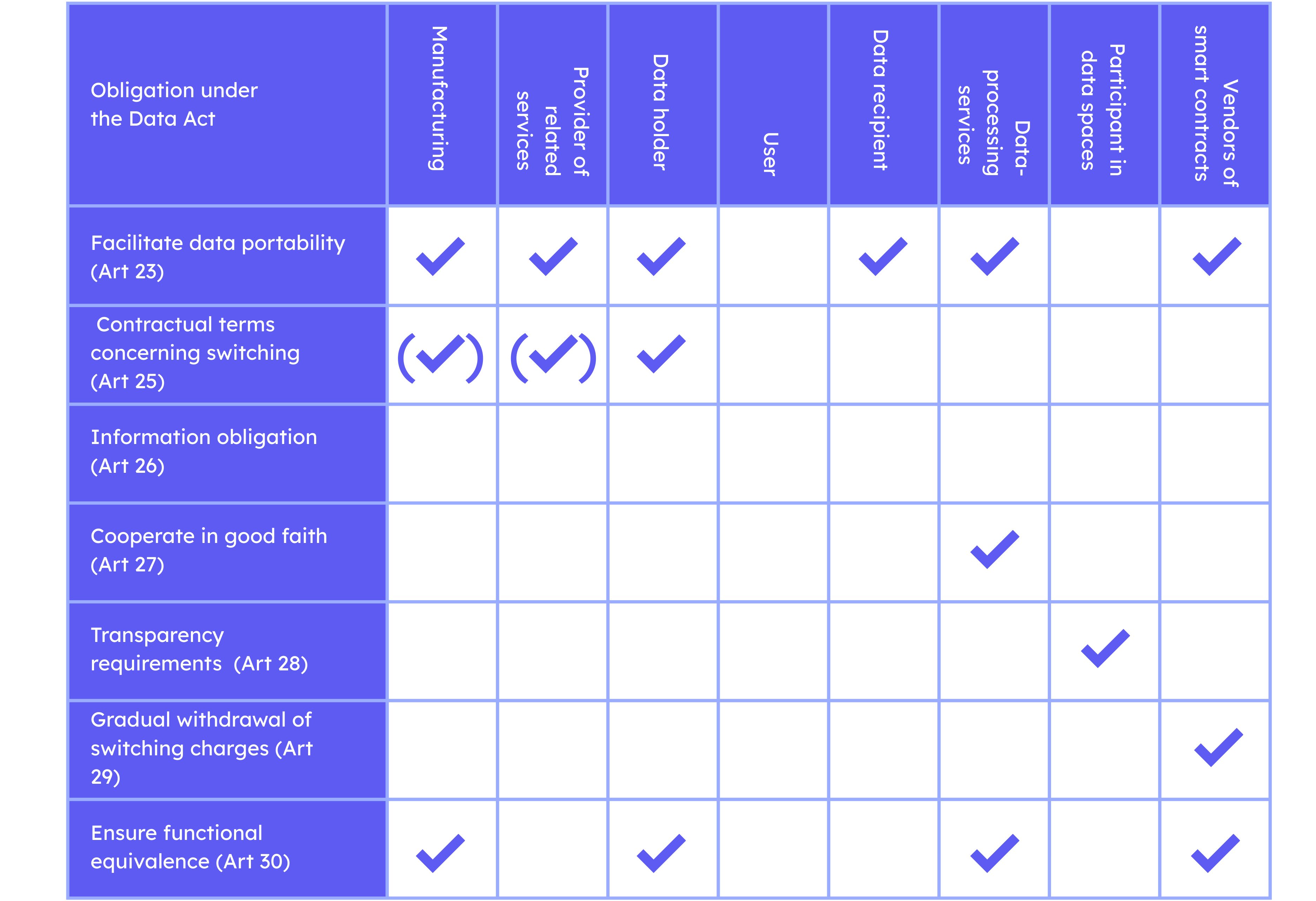
Using the obligations table in practice
The table above provides a structured overview of compliance under the EU Data Act. However, in order to manage your organisation’s approach to compliance across the various regulatory frameworks in the EU, it’s recommended to seek expert advice. Prighter is a one-stop shop for privacy, digital, and AI governance compliance globally, helping organisations to meet their obligations proactively and without complexity.
Book a free consultation to find out how Prighter can support your team, or get started today. It’s quick and easy.