
EUデジタルサービス法(DSA) - 透明性報告(Transparency Reporting)連載第2回: 欧州委員会テンプレート
DSA透明性報告の第2回年次報告から仲介サービス提供者に求められる変更点
:quality(80):fill(transparent))
Source: https://prighter.com/ja/resources/digital-services-act-transparency-reporting-part-two

最近の執行事例により、デジタルサービス法(DSA)および仲介サービス提供者に対する要件が改めて注目を集めています。一方では、超大規模オンラインプラットフォーム(VLOPs)および超大規模オンライン検索エンジン(VLOSEs)の監督当局である欧州委員会が、とりわけXに対する1億2,000万ユーロの制裁金を科すなど、その強い姿勢を示しています。(主な執行活動は欧州委員会のウェブサイトで公表されています。)
他方で、各国当局も行動を開始しており、ドイツ当局が企業に積極的に接触してDSA遵守を求めたり、アイルランド当局が仲介サービスの把握および調査を進めたりしています。執行が本格化する中、DSA上の義務を理解し、これを遵守することの重要性はかつてないほど高まっています。(DSA上のすべての義務の一覧表については、こちらを参照。)
DSAにおける重要な義務の一つが透明性報告(transparency reporting)です。仲介サービス提供者に対して報告書の公表を求めることは、説明責任を高めることを目的としています。VLOPsおよびVLOSEsは2023年以降、半年ごとに報告する義務を負っており、当該報告書は公表されていますが、それ以外の仲介サービス提供者は2024年分の報告から年1回の報告が義務付けられています。
報告書の内容を比較しやすくし、有用なものとするため、欧州委員会はテンプレートを導入し、2025年以降の報告から当該テンプレートの使用が義務付けられます。
1. 透明性報告の報告期間およびスケジュール
仲介サービス提供者向け透明性報告は、2年目から年次運用に移行します。2025年報告は2025年2月17日から2025年12月31日までの期間を対象とし、それ以降の報告サイクルは暦年を対象とします。
透明性報告は、対象年度終了後2か月以内、すなわち翌年2月末までに公表する必要があります。
2. 透明性報告の内容
DSA上の他の義務と同様に、報告義務も段階的なアプローチを採用しています。社会的影響が大きく、重要性が高いほど、より厳格な報告義務が課されます。
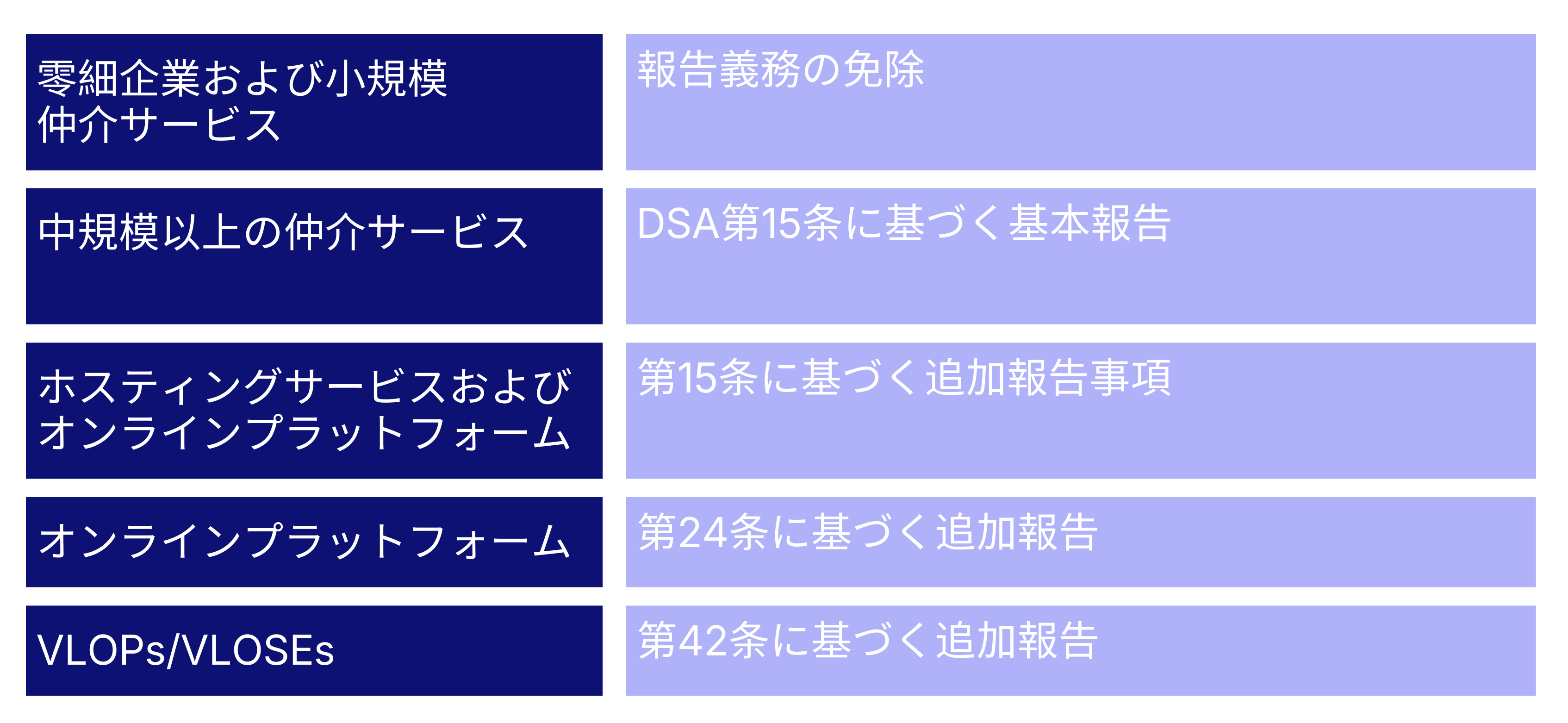
報告対象は主としてコンテンツモデレーションに関する情報です。提供者の類型ごとの報告義務の一覧は「Reporting Obligation Chart」にて整理しています。
3. 透明性報告の形式
2025年以降の新たな変更点は、報告書の形式です。欧州委員会は実施規則を制定し、附属書Iに透明性報告テンプレート、附属書IIにその使用方法に関する指示を定めました。テンプレートはCSV版およびXLSX版で提供されています。
報告テンプレートは以下の2部構成です。
- 定量テンプレート
- 定性テンプレート
定量テンプレートは8つのセクションで構成され、DSA第15条、第24条および第42条に基づき報告すべき情報を機械で読み取り可能な形式で記載します。どのサブセクションを記入する必要があるかは、提供者の類型によって異なります。
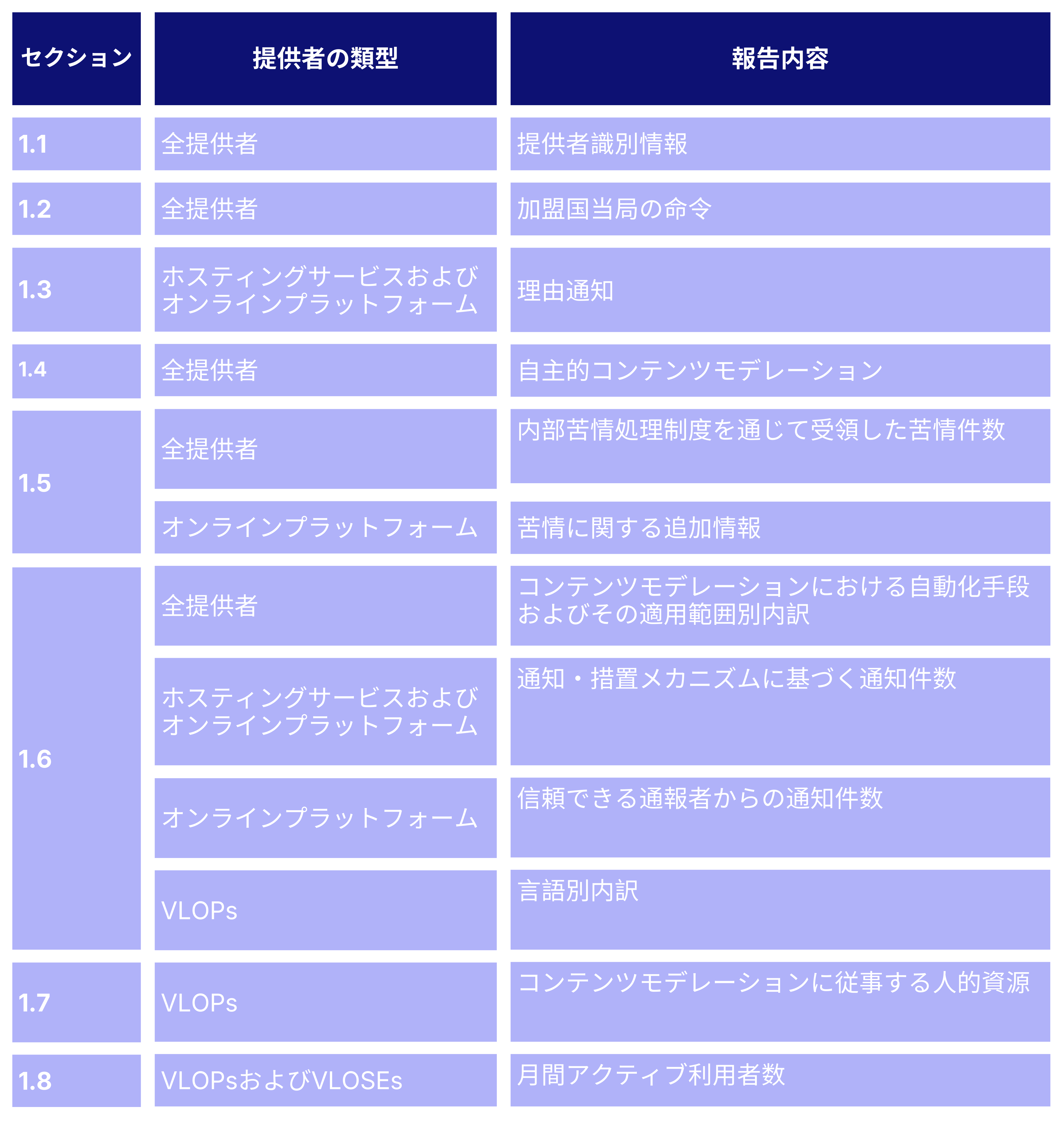 定性テンプレートでは、仲介サービス提供者はコンテンツモデレーションおよび使用している自動化手段について、実質的で分かりやすい情報を提供しなければなりません。さらに、VLOPsはコンテンツモデレーションに関する人的資源についての情報も含める必要があります。
結論
平均的な仲介サービス提供者にとって、透明性報告に記載すべき情報はほとんどない、または限定的である場合が多いです。そのため、欧州委員会の実施規則および報告テンプレートは、一般的な提供者にとって過度に複雑に見える可能性があり、テンプレートの使用は内部的に負担の大きいプロセスを生じさせるおそれがあります。ただし、VLOPsおよびVLOSEsがすでに当該テンプレートを使用していることは、一定の指針となります。
透明性報告および欧州委員会の新テンプレートについて質問がある場合は、Prighterまでお問い合わせください。当社の専門家が、世界各国の企業のコンプライアンス対応を支援します。Prighterは、報告業務を簡素化し、DSAに適合した透明性報告書を作成するためのツールも提供しています。
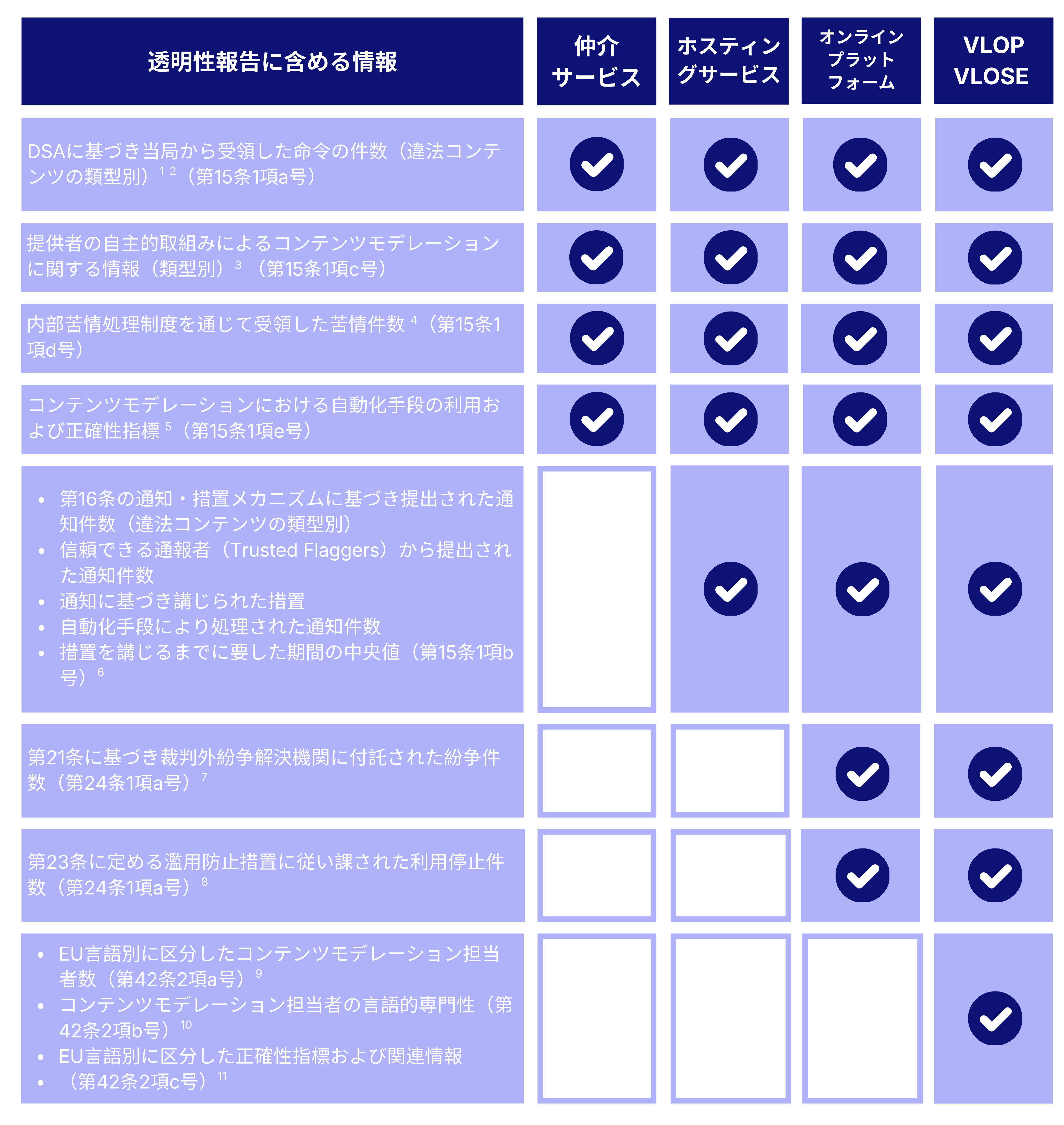
附属書1:透明性報告に記載すべき情報の段階的整理
Stay up to date
Get the latest privacy and digital governance updates from Prighter.
Open signup form in a new tab